


What Is Ozone Generators?
Ozone Generators are a type of air purification system that produces Ozone (O3) to help reduce the presence of airborne contaminants. Ozone's highly reactive composition of three Oxygen atoms allows the molecules to attach to airborne organic contaminants to oxidize and eliminate them.
Why Choose Us
Shipping Service
We have established a robust shipping service offered to ensure timely and secure delivery of orders worldwide.
Reliable Supply
We offer a vertically integrated supply chain model to ensure reliable long-term supply and complete traceability.
Customer Service
We prioritize open communication to address our clients' specific requirements and deliver personalized solutions.
Technical Support
Our team of experts is available to assist with troubleshooting, answer technical inquiries, and provide guidance.
-

Commercial Ozone Generator 10000 Mg/h
10g/h ozone generator has disinfection and sterilization, eliminate peculiar smell, degradation of
Add to Inquiry -
The sterilizing principle of UVC disinfection cabinet is the irradiation of microorganisms such as
Add to Inquiry -
Studies have shown that ozone is a broad spectrum, efficient, rapid fungicide, which can quickly
Add to Inquiry -
Ozone Sterilizer Bed Unit Can kill a variety of bacteria, viruses and propagules, mattresses,
Add to Inquiry -
10g/h Commercial Ozone Generator Home Air Purifier
Our Portable ozone generator is suitable for various settings including homes, offices, and
Add to Inquiry -
Use vacuum disinfection. Bed unit ozone disinfection machine has the function of vacuuming, can
Add to Inquiry -
Ozonator for drinking water is used to produce ozone gas (O3) device.Ozone is easy to decompose
Add to Inquiry -
The sterilizing principle of UVC disinfection cabinet is the irradiation of microorganisms such as
Add to Inquiry -
Ozone is a gas disinfectant, and its sterilization process is strong oxidation to make various
Add to Inquiry -
First, please turn on the power of the machine, and then the machine will start to work by
Add to Inquiry -
Ozone is made up of oxygen molecules.The oxygen we're most familiar with, and the oxygen we breathe
Add to Inquiry -
20g ozone generator is a mobile ozone generator. It is the use of circulating air treatment
Add to Inquiry


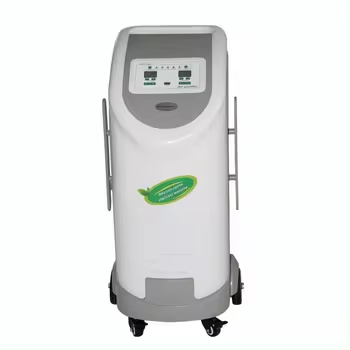


You may have heard of an ozone generator, but you may not know how an ozone generator works. An ozone generator, or ozone machine, is a device that converts oxygen from various sources such as ambient air, dry air, or concentrated oxygen into ozone. Ozone generators produce ozone (O3) by adding energy to oxygen molecules (O2), which causes the oxygen atoms to part ways and temporarily recombine with other oxygen molecules. The ozone is then used for water disinfection and air purification. Ozone generators can come in small hand-held sizes, all the way up to large-scale industrial models that can produce several hundred grams of ozone each hour. Industrial ozone generators work very similar to ambient air units except they require very clean and very dry air or oxygen and have a corona cell specially designed to generate very high ozone concentrations.
Once the ozone is produced it reacts with a pollutant, bacteria, virus, or mold, and breaks it down into less complex molecules through a process called oxidation. Ozone that has not reacted with other molecules will decompose into oxygen over time. Ozonation destroys odors, and disinfects air, water, and other materials. It has even been approved by the USDA and FDA for use on food.
Although many manufacturers claim that ozone will render almost every contaminant harmless, it is important to follow safety guidelines, understand the structure of the contaminants, and have an ozone expert properly size the ozone generation unit.
Ozone Generation
The ozone generation process occurs naturally in the environment in one of two ways: Lightning strikes or Sunlight. After a thunderstorm, we probably all recognize the smell of ozone. The fresh, clean, spring rain aroma that we notice after a storm is most often a result from nature's creation of ozone. The second method is ultraviolet light from the sun. Through this method, oxygen in the presence of the sun's UV light can be broken down and form into ozone.
Ozone generators recreate these processes in a controlled setting. This leads into two types of ozone generators: Corona discharge generators and UV light generators.
Corona Discharge
These machines create ozone by taking oxygen and forcing it forcing it through a high voltage metallic grid. The high voltage splits apart the oxygen molecules into single atoms. These atoms then attach to other O2 molecules in the air to form ozone (O3.)
A few advantages of using corona discharge are that it creates a consistent ozone output, it generates high ozone concentrations, it provides fast organic (odor) removal, and it is ideal for water applications.
Ultraviolet (UV) Light
This process of ozone generation is similar to how the sun's ultraviolet radiation splits O2 to form individual oxygen atoms. UV light changes oxygen into ozone when a wavelength at 254 nm (nanometers) hits an oxygen atom. The molecule (O2) splits into two atoms (O) which combine with another oxygen molecule (O2) to form ozone (O3). UV Light occurs naturally through the sun rays, but this process is considered to be less efficient than corona discharge, according to InterNACHI.
The advantages of using UV Light include a lower cost than corona discharge, it is simpler to assemble and use, and the ozone output using UV Light is less affected by humidity.
Common Uses For Ozone Generators
Because despite the risks, they have a strong ability for cleaning, sanitizing, and removing offensive odors. Unlike an air purifier, you can't operate an ozone air cleaner on a continual basis, but that doesn't mean they should never be used. It simply means they need to be used cautiously.
A Few Uses For Ozone Generators Include:
Killing Mold and Mildew: Using ozone air purification to “blast” or “shock” mold and mildew is a common commercial practice. Airborne mold spores can be harmful to health, especially the lungs and respiratory system. Mold and mildew can trigger asthma and allergies, so removing them is always a top priority. However, mold removal often requires the removal and demolition of building materials, including wood framing, sheet rock, carpet, and ceiling panels. With ozone generators, mold can be removed in a relatively quick and affordable fashion.
Removing Bacteria, Germs, and Viruses: Disease-causing substances like bacteria, germs, and viruses are often hiding in plain sight. Places like the kitchen sink, bathroom floor, TV remote, and even the salt and pepper shakers can all hold bacteria and germs, increasing the likelihood of sickness in your home. Ozone generators, however, have proven abilities to remove many disease-causing substances by attacking the contaminants at the molecular level.
Removing Odors: One of the most common uses for ozone generators is the removal of odors. In the same way that it attacks mold or bacteria cells, ozone gas will also attack the physical airborne cells that make odors. This can be useful for many different purposes, including hotel rooms that have lingering smells from tobacco smoke. Another potential use is by landlords who need to remove the smell of pets from their properties, or by average homeowners who simply want to remove a foul odor in their home. Using ozone gas is often a last-ditch effort to remove an odor. When other techniques, such as cleaning solutions and scented air fresheners fail, having ozone concentrations can be used to “shock” the room.
There are other uses, but these are the main reasons that people choose to release ozone chemicals into their homes, businesses, and property.
Which Ozone Generator Should I Choose?


The principle of shock disinfection with ozone is to fill the cleaned area with a sufficient concentration of ozone, which will take care of the effective elimination of all viruses, bacteria, odors and other undesirable substances. This means that the more space you need to clean, the more powerful generator (in milligrams of ozone per hour) you will need.
Manufacturers' tests show that for every 100 m 2 of space, a suitable output is about 10,000 mg of ozone per hour. However, a more powerful generator can do its job faster in the same space than a weaker one.
Simply put, the choice depends on the application, if you want to use the ozone generator only in your home environment, the basic type BLACK 3500 will suffice.
For companies, hotels, hospitals and other larger or more loaded spaces, the professional middle path BLUE 7000.
For industrial use, large areas or means of public transport with high pollution/odor, we recommend the WHITE 10000 industrial generator.
Keep in mind that too much ozone can cause strong odor that may remain in the room for several weeks.
Before using the generator, thorough mechanical cleaning of the premises should first take place. Do not use ozone as the only form of cleaning, whether it is disinfecting viruses or getting rid of odors.
For maximum results during disinfection, first mechanically clean surfaces that come into contact with humans with conventional cleaning tools. When cleaning areas from odors, etc., thoroughly vacuum and wipe the floors, remove any deposits and deposits of dust or other dirt. Ozone penetrates from the outside in, so dirt deposits make its process more difficult.
We propose a layered approach that starts with the best cleaning you can provide. If the carpet is a problem, have it cleaned thoroughly. If they are caused by smoke-soaked walls, wash them thoroughly, but do not repaint until the problem is completely eliminated. We recommend repainting the walls only after eliminating the problem by cleaning and using the ozone generator.
Ionizers VS Ozone Generators
An ozone generator produces ozone that attacks the source of odor causing gases through a process called oxidation and permanently removes the odor. This is very different from a negative ion generator, or ionizer, whose primary purpose is to reduce particles like dust and pollen floating around in air spaces.
Small floating dust particles can sometimes be noticed in a ray of light shining through a window into a room. An air ionizer is designed to target these dust particles that float in the air. These dust particles are positively charged and constantly repel each other. For example, if you ever took two magnets and tried to put their positive poles together, you would immediately observe that they strongly repel each other. This same type of repelling action keeps small particles suspended in the air.
Air ionizers emit negatively charged particles that cause some particles take on a negative charge. The negative and positive particles then attract each other to form clumps that fall or precipitate to the floor or onto other surfaces. Ionizers are commonly used in industries that produce a lot of dust or powder in their production process. The ionizers are set up with vats under them to collect the powder and are called particle precipitators.
Air ionizers were once sold for 24/7 use in homes and offices for air treatment while the space was occupied. In creating the electrical charge, the ionizer also produced a small amount of ozone that made the air smell fresher.
Ozone generators, on the other hand, are designed to attack odors at the source, and oxidize the substances that are causing odors, so they do not return after treatment. They have been used commercially for decades by hotels, apartments, auto dealers as well as smoke and fire remediation companies. These ozone machines are designed to eliminate gases not particles.
Ozone generators are both powerful and effective but should only be used while the space is unoccupied. Their purpose is to shock treat and permanently remove the source of the odor.
Ozone Generator Safety
Ozone generators are for use in unoccupied spaces and not running when people or pets are present. While O3 is a powerful oxidizer that will eliminate most odors, long-term exposure is not recommended by government agencies because it can contribute to eye and respiratory irritation.
These are valid safety concerns because the ozone breaks apart molecules as part of the oxidation process, especially odor causing molecules. However, humans and pets are also made up of molecules, so ozone at high levels has the potential to irritate the eyes and respiratory system, especially those with asthma or COPD. Therefore, ozone should be used with caution.
In the recent past, some direct marketing companies sold air purifiers that produce ozone to consumers for use in occupied spaces. This created concern at the EPA, the FDA and the American Lung Association, which resulted in adverse publicity for the ozone industry. For decades prior to that time, ozone had been used commercially in the hotel, apartment, janitorial, water and fire damage remediation industries and many others, while spaces were unoccupied.
High Output Claims
All ozone generators require periodic cleaning of the ozone producing elements to continue operating. Beware of units offered on the Internet that cannot be maintained by the buyer because they will stop functioning after a period of time.
Many ozone generators have a very short lifespan. Always check the details of the warranty that a manufacturer provides. Ozone can be corrosive and all ozone producing elements build up a film on the plates that dramatically reduces output. Even plates protected by a filter will build up a microscopic film on the plates over time that causes the ozone production to drop. Beware of ozone plates that cannot be removed and cleaned by the end user.
This is especially true of mica plates because the material cannot be cleaned and alignment is very important. So the mica plates have to be permanently built into a handmade assembly for protection. Thus, the mica assembly can become the most expensive component, by far, in the entire unit. Once the inevitable microscopic film builds up on the mica plates or corrosion occurs, ozone output drops dramatically, making it a throwaway product or requiring a costly return to the factory. The most expensive part in the unit will need regular maintenance but cannot be serviced, so the warranty can become somewhat meaningless.
Our Factory
Suzhou Hanbang sterilizer Equipment Co., Ltd. is a company specializing in the production and sales of air purification equipment and disinfection products with independent research and development. The main products are: ultraviolet sterilizer, plasma sterilizer, electrostatic precipitator air purifier, ozone sterilizer, ozone generator, bed unit disinfection machine, medical laminar air flow clean bench, medical purification screen, etc. series of disinfection products and air purification equipment . Our company has been exporting and selling through Alibaba for more than 6 years. During this period, we have participated in many domestic and foreign exhibitions.


FAQ
Q: What is an ozone generator used for?
Q: How are ozone generators made?
Q: What is ozone material?
Q: What is the difference between an air purifier and an ozone generator?
Q: Where to place an ozone generator?
Q: Do hotels use ozone generators?
Q: Do air purifiers use ozone?
Q: How long to air out a house after ozone?
Q: How much ozone is needed to clean a room?
Q: How do you treat a room with ozone?
As one of the leading ozone generator manufacturers and suppliers in China, we warmly welcome you to wholesale bulk cheap ozone generator n stock here from our factory. All customized products are with high quality and competitive price. Contact us for quotation.
wall mounted air filtration, uv c disinfection cabinet, uv lights