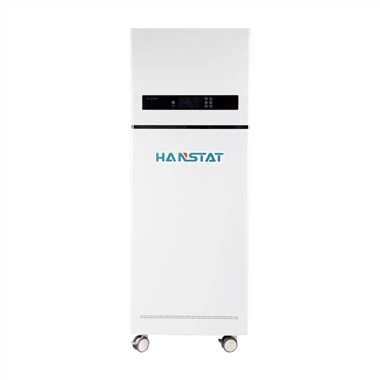
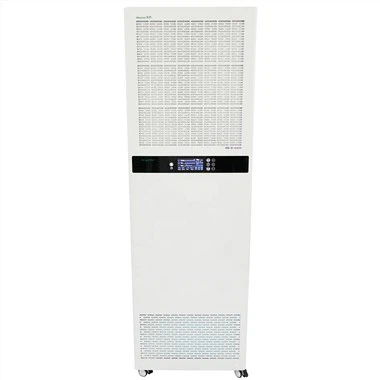
Before choosing an air purifier, you need to pay attention to these four precautions!
Aug 18, 2021
In recent years, the increase in foggy weather caused by air pollution, coupled with the outbreak of the new crown epidemic, has made people pay more and more attention to healthy air, and more and more attention to air purifiers. However, when choosing an air purifier, many people do not know enough about it, which may cause the purchase of an air purifier to not only fail to achieve the purpose of air purification, but also cause secondary pollution. The editor below summarizes four precautions, hoping to help you choose an air purifier that is more suitable for you.
1. Just open the window of the car, no air purifier is needed
Many car owners think this way, as long as the car is more ventilated and there is air conditioning in the car, it doesn't matter if you don't need an air purifier. However, relevant air monitoring centers have conducted relevant tests and found that nearly 90% of vehicles have problems with excessive formaldehyde or benzene content in the air in the car, and a large proportion of vehicles have formaldehyde exceeding the standard by more than 5 or 6 times. Everyone should know that the volatilization of formaldehyde may last for decades, and the purification effect cannot be achieved only by opening windows for ventilation and air conditioning in the car. In addition, if you encounter severely polluted weather, you may not be able to open the window, and you can only use an air purifier to remove the pollutants. Therefore, from the perspective of healthy breathing, it is recommended that a professional car air purifier is required in the car as at home.
2. As long as HEPA is available, it is an excellent air purifier
Some people may not know that HEPA filters also have strict levels. The higher the HEPA level, the smaller the diameter of the particles that can be filtered, the better the filtering effect. At present, common air purifiers on the market generally use H9 and H10 grades, while high-end air purifier brands use H12-H14 grade HEPA networks. However, it should be noted that the higher the level, the greater the wind resistance, the greater the noise, and the more expensive the cost. For general household air purifiers, it is recommended to be around H12 instead of high-grade HEPA filters.
3. It saves trouble and money without changing the filter
Many air purifiers on the market now require regular replacement of their filters. Some consumers find it troublesome, and the filters will also cost themselves a part of the cost, so if there is any need for air purifiers that do not need to replace the filters . In order to deal with these consumers, some air purifier manufacturers have introduced filters that can be cleaned without replacing them. In fact, this is just a publicity stunt. Because the washable filter is a primary-efficiency filter, it generally filters the larger particles of pollen and dust, and the HEPA filter can really effectively remove PM2.5, formaldehyde, germs and other pollutants that are more harmful to the human body. And activated carbon mesh, and these filters need to be replaced regularly. So if you come across this type of air purifier, which is known as a washable filter, you must be careful and don't be fooled into buying a less useful air purifier.
4. Price and function first, don’t care about secondary pollution
Many consumers who don’t know much about the functions of air purifiers think that an air purifier with a low price and a lot of functions must be a good air purifier. May cause secondary pollution. Although ozone can kill bacteria, viruses and decompose gaseous pollutants, excessive ozone can affect lung function, cause asthma, and even cause cancer. Therefore, it is recommended that consumers pay close attention to the ozone problem when buying air purifiers and carefully choose air purifiers that use electrostatic dust removal filtration technology.