Is An Air Purifier Useful? Understand The Principle Of Purification And You Will Know What's Going On
Jul 03, 2021
As people’s requirements for the quality of life are getting higher and higher, some manufacturers have developed air purifiers according to consumers’ needs. However, many users do not know whether this stuff is useful because they don’t know much about this kind of equipment, so let’s talk about it now. Knowledge related to air purifiers.
Is an air purifier useful?
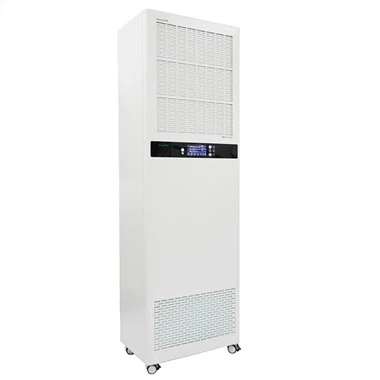
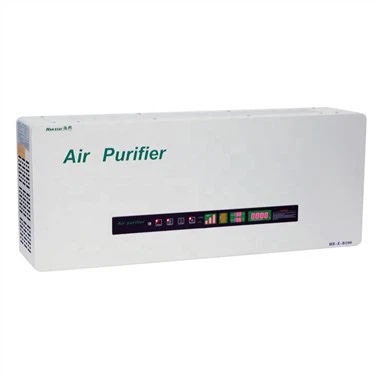
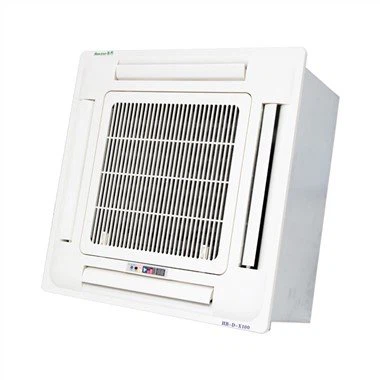
The structure and principle of the air purifier are not as complicated as imagined. It can indeed play a role in purifying the air. The most common air purifier consists of three parts, the power supply system, the wind system, and the most important filter system. The power supply system is air. The purifier provides a stable power supply, and the wind system sucks in or sucks out the indoor air. When the wind system is working, the sucked or sucked air will be filtered by the "filter system" to achieve the effect of purifying the air. Therefore, it is certain that no matter what kind of air purifier, as long as the filter system can function normally, it can purify the air.
Types of "filter elements"
The main factor that determines the effect of air purifiers is the filter element, and the filter element is divided into many types, such as photocatalyst, activated carbon, synthetic fiber, HEPA high-efficiency material, negative ion generator, etc. Most air purifiers on the market have filter elements. Material, and the corresponding technology is applied. The most common air purifiers generally use photocatalysts, synthetic fibers, and activated carbon. The slightly higher-end air purifiers will use HEPA high-efficiency materials and negative ion generators as "filter elements" (just a general term, some refer to technology, Standards, etc.).
Material type of filter element
Photocatalyst: Without mentioning the chemical formula, let’s talk about what a photocatalyst is. A photocatalyst is actually a kind of semiconductor material, which can play a role in disinfection and sterilization under the irradiation of a light source, and this semiconductor material has excellent chemical stability. Long-term use is harmless to the human body, has a long service life, and has super hydrophilic and self-cleaning properties. The most widely used and common photocatalyst equipment in various fields is the "mosquito trap", and some air purifiers have this function.
Activated carbon: Activated carbon is not carbon. After special treatment, activated carbon will be produced. The surface of activated carbon has countless tiny pores that are invisible to the naked eye. These pores are calculated in nanometers. Manufactured into a filter net or filter element, combined with an air purifier. In addition, because activated carbon has the effect of adsorbing formaldehyde, some businesses will also use the gimmick of "in addition to formaldehyde" to promote air purifiers, but we have to figure out that in addition to bacteria and harmful gases, there are also naked eyes in the air. Visible and invisible dust, fine dust, these things will block the activated carbon filter element, and activated carbon adsorption of formaldehyde is also limited, not "infinite adsorption", unless the activated carbon filter element is frequently replaced, otherwise it has no effect at all.
Synthetic fiber: Synthetic fiber is a man-made material. Through artificial weaving, structure weaving and other processes, a tightly structured and complex mesh and sheet-like fabric is made, and it is made into a filter element with some good permeability and strong filtering auxiliary The material is made into the filter element of the air purifier. Of course, this type of material generally uses environmentally friendly materials, which will not cause harm to the human body and have a long service life. The "low-end purifiers" used in the home environment are all air filter elements made of such synthetic fibers. It is mainly used to purify dust and fine dust in the air.
HEPA high-efficiency material: Refers to the filter that meets the "HEPA standard". There are related standards in any industry. In fact, it is the same as synthetic fibers. They are all synthetic filters. However, HEPA high-efficiency materials filter The mesh pore size and spacing requirements are higher, and the filter efficiency of 0.1~0.3 micron dust must reach 99.7% or more, and it can be regarded as a qualified "HEPA high efficiency material". Like the filter paper in a mask, it is a kind of HEPA high-efficiency material. According to the grade of the mask, the grade of the filter paper will be different. It is no exaggeration to say that all air purifiers have the best dust removal effect. The filter element is HEPA high-efficiency material.
Negative ion generator: This type of air filter element is a real high-tech product, it can no longer be called a filter element, the so-called negative ion generator, we can understand it as a device that "induces the purification effect", users turn on this type of purification When the device is used, the negative ion generator will continuously generate negative air ions. The negative air ions will be charged with dust, smoke, viruses, bacteria, pollen, skin dander and other substances in the air, and then they will be absorbed, collected and stored by a special device. However, it should be noted that although the use of this type of air purifier can purify the air, it is not suitable for long-term use. Long-term use will cause some problems, such as headaches, weakened immunity, and so on.
Conclusion: In summary, we can determine that the air purifier is useful. If it is a household air purifier, the first air purifier with a filter element that meets the "HEPA standard" is recommended. Now many air purifiers have multiple functions, and some filter elements are also It is made of a variety of composite materials, but try not to choose an activated carbon air purifier. The effect is not as good as expected, unless the activated carbon filter is replaced frequently.